









When researching why NBA fans don’t watch the WNBA, many sources suggest it is due to the lack of available TV coverage. However, the average WNBA game draws around 1.3 million viewers, with certain games reaching up to 2.7 million viewers, nearly matching the NBA’s game average of 1.5 million viewers. So if 1.3 million people have access to media coverage, why don’t these NBA fans watch?
Sexism in women’s sports has existed for decades, intentional or not. At Glenbard South, the winter “Pack the Place” basketball games rotate time slots between an early game that fewer students attend, and the later game that usually draws a larger crowd. Last year, the girls’ varsity basketball team played during the early slot, while the boys team played in the later, higher-attended game. This year, the girls’ team should have played the later game, but instead were given the early time slot again. Ironically, the girls’ varsity basketball team has a far better record than the boys’ team, having been conference champs both this year and last, giving little reasoning as to why the switch did not happen. The girls’ team even beat East, but few students were aware because they only heard or attended the boys’ game, in which South lost.
Additionally, the Raider pep band, cheer team and dance team have attended very few girls’ basketball games. The band played at one girls’ game, “Pack the Place,” where the boys were also playing, and the cheer squad and dance team rarely appear at girls’ games. It seems the boys’ games draw more attention and festivities, even though they win less games. Nevertheless, the boys’ team should still have fans, but the girls’ team should receive the same attention at their games. At the girls’ sectional game, no students, cheerleaders, dancers or band members attended; the only fans being relatives of the players, while the opposing team had brought its cheer team, dance team and a fairly large student section.
Many would assume that after the introduction of Title IX, a federal law against the discrimination of girls in federal-funded school athletics, there would be less sexism towards female athletes, but it has instead opened the door for the further belittlement of girls in sports. According to the Tufts Daily, increased viewership of women’s basketball has coincided with greater disrespect towards female athletes online and at the games.
During the 2025 WNBA season, reports of sexism intensified both online and in the stands. On four separate occasions, “fans” began throwing adult objects onto the court, not only treating the players with disrespect and sexism that the NBA has never experienced, but posing a risk for injury as well while these athletes attempt to do their jobs.
One example of blatant creepiness from the media towards the players came from reporter Gregg Doyel of the Indianapolis Star, when he made an uncomfortable remark to Indiana player Caitlin Clark. In reference to her heart-shaped hand gesture she sometimes makes for her crowd, Doyel exclaimed, “Start doing it to me and we’ll get along just fine.” Beyond being inappropriate, it is unlikely that a reporter would ever make such a remark to a men’s basketball player. In agreement, the CBC wrote that “And now, as women’s sports are experiencing a meteoric rise in popularity, breaking attendance and viewership records, a new report highlights how sexism still holds back women’s professional sports — and investment decision-making.”
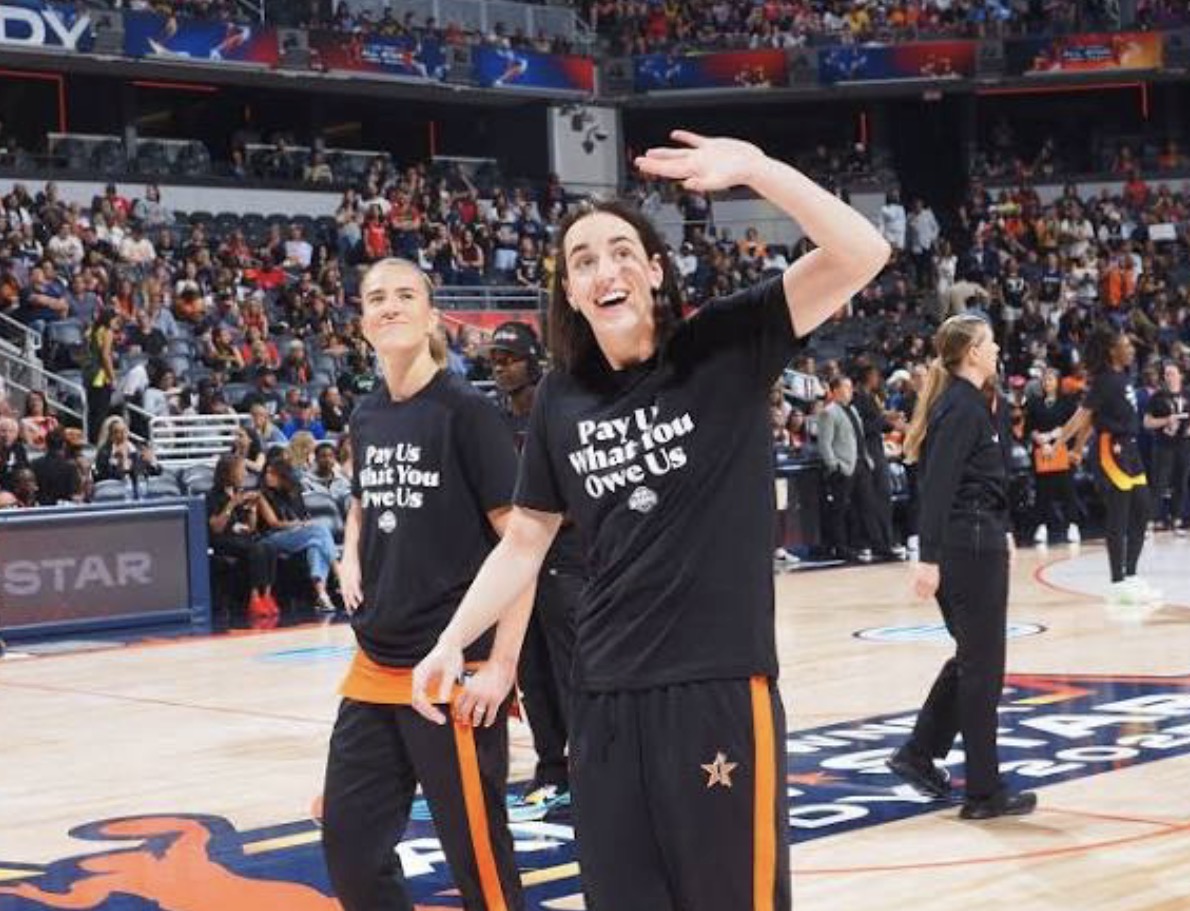
WNBA players receive a minimal share of the league’s profits, earning 9.3% of the league’s revenue, in contrast to the NBA that pays their players 49% of the league’s income. There is a common misconception that WNBA players expect the same salaries as NBA players, when the NBA has a much larger income than the women’s league. However, WNBA players only expect the same percentage of revenue in relation to their league’s earnings. WNBA players deserve 49% of the WNBA’s income as well, and it makes little sense that they wouldn’t, justifying their protests and “Pay the Players” campaign.
These issues are only a reminder of how far women in sports still have to go. Disappointingly, women’s basketball is one of the most watched and recognized female sports, yet it remains underrepresented, further displaying the lack of recognition for female athletics as a whole.